
In and around Mantua
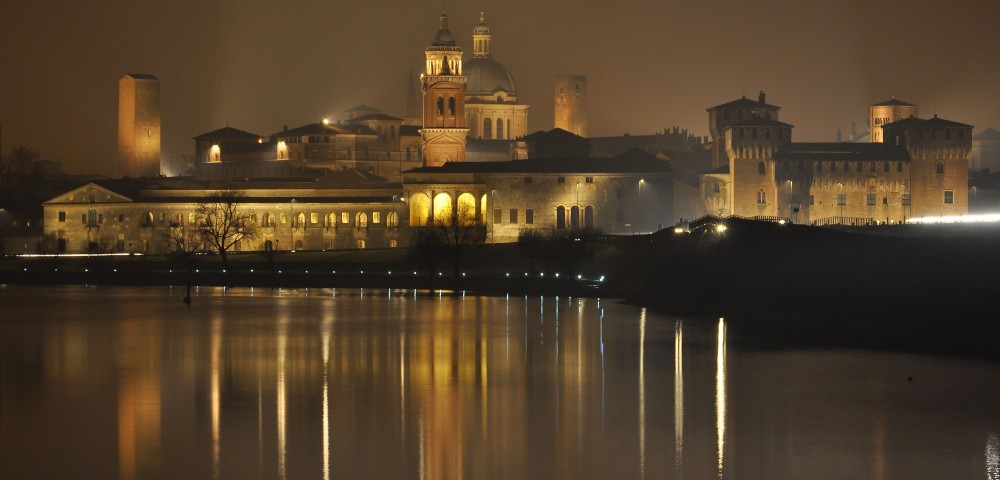
Mantua, a UNESCO World Heritage Site and the homeland of Virgil, is lapped by the waters of the Mincio river and its three lakes; its history is concentrated in the four centuries of the Gonzaga reign, which left admirable proof of its splendour.
Don't miss the Ducal Palace, the Palazzo Te designed by Giulio Romano, the house of Rigoletto, the Basilica of S. Andrea by Leon Battista Alberti, the Teatro Bibiena, the Cathedral and the many squares linked by colonnades.
The lakes that surround the city give Mantua a look all of its own, an almost magical appearance, that of a city risen from the water. They are characterised by lotus flowers, groves of reeds, and marshland areas where the local bird life builds its nests and flourishes, protected oases that can be visited by boat, and river ways that can be sailed on a motorboat, passing through the Governolo locks to reach the river Po.
Mantua is surrounded by historical villages resting on the stunning, multi-coloured flatland, interrupted in the north by green moraine slopes covered in vineyards, and crossed in the south by the great river Po, the undisputed protagonist of this "lowland" countryside. Some of the most beautiful medieval villages in the area include Sabbioneta, Castellaro Lagusello and Borghetto sul Mincio.
Sabbioneta
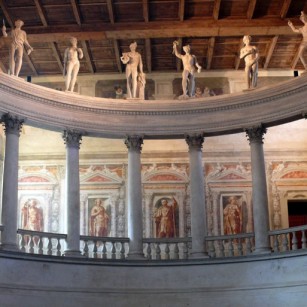
Sabbioneta, the ideal city founded by Vespasiano Gonzaga, together with Mantua is an "excellent example of Renaissance land planning, architecture and art". Nominated UNESCO World Heritage Site and built based on humanistic principles of the ideal city, "it is a dream made of stone", a timeless wonder that slumbers in the vast flatland. It is surrounded by an original ring of walls and star-shaped bastions that contain the Ducal Palace, the Palazzo Giardino, the Galleria degli Antichi and the Teatro all'Antica, in addition to buildings that are currently inhabited.
Castellaro Lagusello
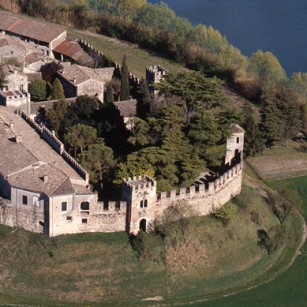
This medieval village, which stands tall on a rise overlooking the little lake of the same name, is surrounded by the hills of the amphitheatre-shaped moraine range of Lake Garda. Dignified and silent, contained within the ancient city walls, this charming fortified village features in the list of "The Most Beautiful Villages in Italy".
Borghetto sul Mincio
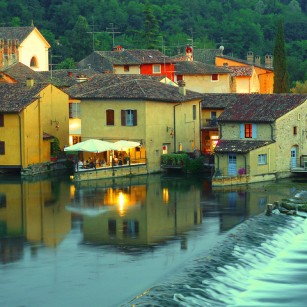
Borghetto can easily be reached by bike, as the cycle path conveniently takes you right there. It is the ideal place to stretch your legs after a long ride and relax by sitting down to enjoy a drink overlooking the waters of the river Mincio. Borghetto is a small settlement that sprang up in the 1400s around a series of water mills for grinding wheat and husking rice. Look out for the ruins of the Visconteo Bridge and the wheels of the water mills, accompanied by the sound of the flowing water.